Promoting tribal health through nutrition education
Author: Vanessa Beeson
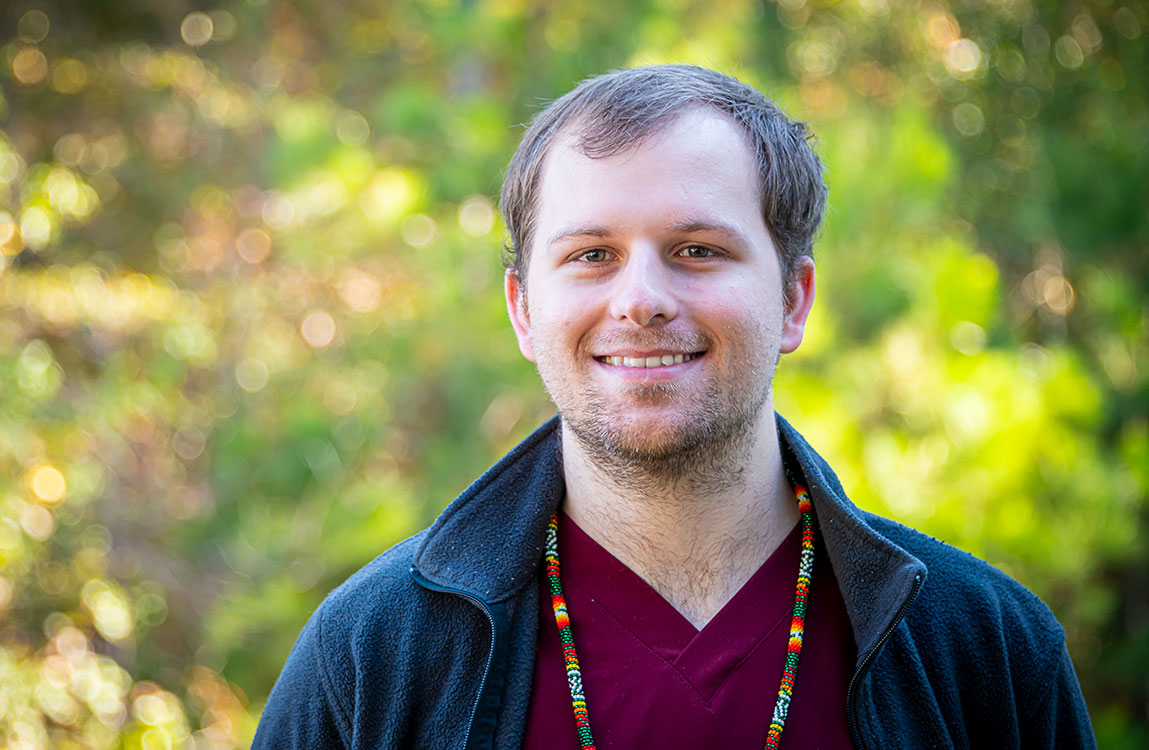
Bennett Pope (Photo by David Ammon)
Bennett Pope knows an ounce of prevention is worth a pound of cure. The two-time College of Agriculture and Life Sciences alumnus is a dietitian and nutritionist for the Mississippi Band of Choctaw Indians, serving families through the tribe's food distribution center in the Pearl River community.
The Byram, Mississippi, native works to improve the lives of more than 500 families across the tribe's eight communities.
"My role focuses on nutritional education. I teach cooking classes, write newsletters, create handouts, and collaborate with the MSU Extension Service on programs like gardening workshops, knife skills, and food preservation. We also conduct health fairs from Crystal Ridge to Bok Homa," Pope said.
He said food distribution programs only succeed when families know how to use what they receive.
"For example, someone might get butternut squash and not know what it is or how to prepare it. I develop recipes, explain the health benefits, and show multiple cooking methods. I help bridge that educational gap so families can eat well and manage conditions like diabetes and obesity, which disproportionately affect Native American communities," he said. "While I wouldn't call it healthcare in the hospital sense, what I do is very much public health, focused on community nutrition and education."
Pope earned his bachelor's and master's degrees in nutrition from Mississippi State in 2022 and 2024, respectively, and completed the university's dietetic internship program.
His journey to the field began at Holmes Community College.
"I took a nutrition course, which combined everything I loved about chemistry, anatomy, and physiology, and that's when I decided I wanted to become a dietitian," he said.
That decision led him to MSU, where he found his fit.
"Since Mississippi is my home state, I wanted to stay here. When I toured the different programs, MSU stood out as a welcoming and supportive community, and I loved the atmosphere. It was easy to make friends, and when I toured the labs in Herzer and saw all the food science work happening here, I was so impressed. I couldn't wait to be part of it in any way I could," he said.
As a student, Pope gained valuable experience as a research assistant and through community service.
"It wasn't what I originally expected, but it was a valuable experience. I also participated in health fairs, volunteered with free dinner programs, and helped with food drives and church dinners. That work really shaped me," he said.
The MSU dietetic internship prepared him for his career.
"During my internship, I traveled across Mississippi to hospitals, the WIC program, Aramark on campus, and other sites. Everywhere I went, I met people who taught me not just technical skills, but soft skills like critical thinking and communication," he said. "We developed projects, created budgets, and even learned clinical skills such as nutrition-focused physical exams."
Mentorship also played a pivotal role.
"Looking back, I learned so much from mentors and from volunteering. Leadership was another big part of my growth. Dietetics is a small field, so even one connection can open doors. I've had the privilege of learning from people who built major programs throughout the state," he said.
Now, Pope is making an impact nationally. He was recently elected chair of the Public Health/Community Nutrition Dietetic Practice Group with the Academy of Nutrition and Dietetics, a three-year position where he will focus on professional development, resources for members, and advocacy for nutrition policies.
As his career expands, Pope remains rooted in his mission with the Mississippi Band of Choctaw Indians.
"Ultimately, prevention is better than treatment. My goal is to equip families with the knowledge to cook healthy meals, so children grow up with better habits," he said.
From classrooms and clinics to communities across Mississippi, MSU's College of Agriculture and Life Sciences and its graduates advance health, train future professionals, and improve lives. Their work transforms knowledge into solutions that strengthen our state and shape a healthier future for all.
Date: 2026-10-09