CALS Influence Stories
Perennial Partnerships
MSU alumnus reflects on institutional growth and prosperity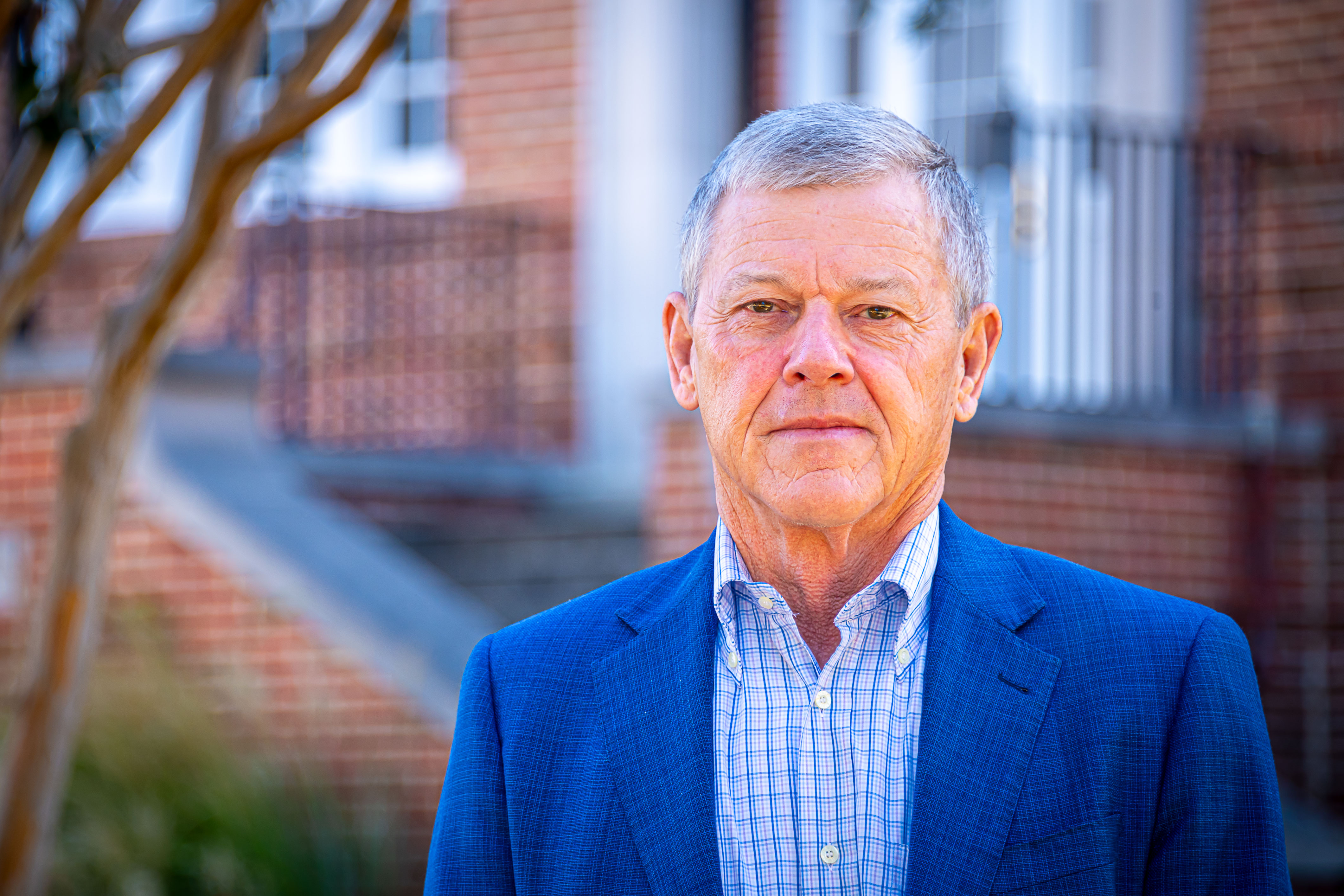
Mississippi State alumnus Marty Fuller knows strong relationships are essential to a university’s success today. He has served in many capacities at the university, from student to faculty; assistant director, then associate director of the Mississippi Agricultural and Forestry Experiment Station; and director of federal relations.
Today, he is a senior consultant at Cornerstone Government Affairs, where he represents MSU, among other clients, providing expertise and securing funding for the university’s initiatives and goals. Fuller has played a key role in developing many of the partnerships between the university and government entities that have made MSU the teaching and research powerhouse it is today.
When Fuller took his first job on MSU’s campus over 50 years ago, Capitol Hill could not have felt farther removed from his world. His father, an extension agent with the university, had recently passed away. Wanting to help the family, Bill Bost, director of the MSU Extension Service, offered the 14-year-old Fuller a student worker position in the extension service print shop, then located in the basement of Lloyd-Ricks—a job he held through high school and while earning his bachelor’s degree in agricultural economics. He went on to earn his master’s and doctorate from the same department.
“My number one goal in life was to teach and research at MSU. Starkville has always been home,” Fuller said. “After my master’s degree, I was looking at other universities’ doctoral programs because that was the most common path, but I had the good fortune of being able to stay here.”
He made the leap from student to faculty after graduating in 1984 and took a job in his home department under Dr. Verner Hurt, who was department head at the time. As an assistant professor, Fuller served on the Ph.D. committee of Dr. Mark Keenum, also hired into the department, and worked closely with him on research projects before he left the university for Washington, D.C.
“Dr. Keenum and I were both working in different areas of catfish research, so we published several articles together in those days,” Fuller said. “We were also on the department’s catfish cooking team at a time when catfish was new to the market, and we traveled extensively, introducing it to as many people as possible.”
Fuller continued to work with Keenum on the department’s behalf when the current president left MSU to serve as Senator Thad Cochran’s legislative assistant for agriculture. While keeping his faculty appointment, in 1993, Fuller took on a formal role with the federal government as coordinator of special research initiatives for the Mississippi Agricultural and Forestry Experiment Station. And as the university grew and evolved, so did Fuller’s role in its operations.
Four years later, he transitioned from his long-time faculty role to MAFES administration, serving under director Vance Watson. A few years after that, he became the director of federal relations for MSU, acquiring grants and resources and advising Congress and federal agencies on issues affecting the university.
Fuller officially retired from MSU in 2006. But he didn’t stop working for the university he called home. Building on his lobbying experience, he established his own company, Federal Solutions, representing MSU and a handful of other clients. More than 30 years later, he is still advocating for MSU on Capitol Hill.
“A big part of my job is building relationships with congressional staff, hosting them on campus, and creating a level of trust with them,” he said. “I think the success we’ve had as an institution is due to building these long-term relationships under a clear and unified vision from MSU leadership.”
When his company merged with the independent lobbying firm Cornerstone Government Affairs in 2017, he realized how working with a larger company could deliver even more opportunities for the university than before.
“I was impressed with the company’s expansive intelligence network and its ability to leverage partnerships with other clients, and I’m fortunate to be there,” he said. “We’ve built numerous partnerships between MSU and government, industry, and other universities that have been very impactful.”
Much has changed in Starkville—and in academia overall—since Fuller’s early days. The state’s improved highway system has shortened the commute between campus and branch stations. The student body has grown astronomically, and new buildings have sprouted up around campus since he first walked the halls of Lloyd-Ricks. Research funding, once primarily supplied by the state legislature, is now largely supported by competitive federal grants.
“A growing university brings new challenges and opportunities,” he said. “A long-serving visionary like Dr. Keenum is, I think, the primary reason why we’ve seen so many great advances here lately, not only from an enrollment standpoint but in everything the university does for our nation and our world,” he said.
While the university has changed in many ways, Fuller sees the students entering agricultural disciplines as a strong constant. He still meets with students who show an interest in agricultural policy and want to know more about working in Washington. And he answers their questions with encouragement and honesty.
“As a young person, I went into the business with blinders on. I had no interest in federal government relations until Dr. Hurt handed me a project that pushed me into that world,” he said. “I was fortunate to have that opportunity, and the ones that followed, and go on to have a rewarding second career working on behalf of a university that has done so much for me.
By: Meg Henderson