CALS Influence Stories
Investing in Innovation
New feed mill to boost MSU’s poultry program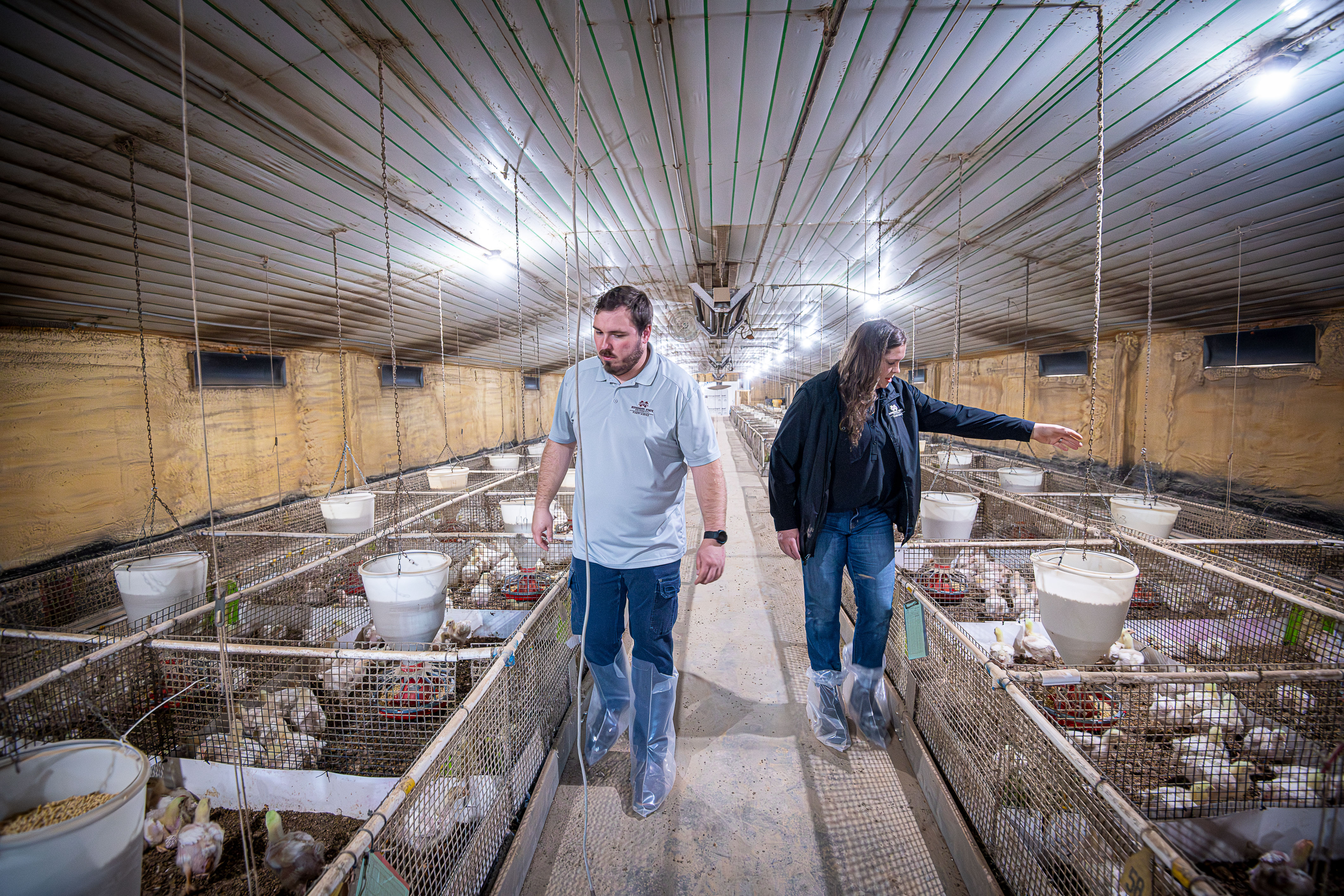
At Mississippi State University’s H. H. Leveck Animal Research Center, commonly known as South Farm, change is on the horizon. Plans for a new poultry feed mill equipped with a pellet mill will expand and complete the Poultry Science Department’s farm-to-fork capabilities in research, teaching, and service.
As one of the six Poultry Science degree-granting universities nationwide, Mississippi State’s upgraded feed mill will join its peer institutions in having in-house pelleting capabilities. This mill will also support the current feed manufacturing class, as well as newly developed curriculum in Feed Mill Quality Assurance and Feed Mill Leadership and Management—further enriching the hands-on learning opportunities for Mississippi State students and better preparing them for their future.
Kelley Wamsley, professor in MSU’s Department of Poultry Science, said the project is about more than a building.
“The new mill is mission critical for continuing our department’s trajectory to excel in teaching, research, and outreach,” said Wamsley, a scientist in the Mississippi Agricultural and Forestry Experiment Station, or MAFES. “The new feed mill represents a commitment to the future of food security, student training, and industry sustainability. It’s a platform to shape the next generation of leaders, advance poultry nutrition and feed manufacture research, and strengthen Mississippi’s number one agricultural commodity.”
Poultry is one of the highest consumed animal proteins across the globe, and feed accounts for 60 to 70 percent of production costs, Wamsley added.
“There is a tremendous amount of pressure on feed mill managers to ensure the feed is manufactured correctly, as it can impact its physical, nutritional, and hygienic quality—and consequently bird health, food safety, and production efficiency,” Wamsley said. “Regardless as to whether or not the students plan to work in the area of nutrition or the feed mill, having education and hands-on training opportunities can help prevent costly mistakes.”
To compliment the new facility, Tim Boltz, assistant professor in the Department of Poultry Science, is leading the development of two new classes, Feed Mill Quality Assurance and Feed Mill Leadership and Management, in response to industry demand.
“These classes will provide students with a strong foundation in quality assurance and managing a feed mill,” said Boltz, who is also a MAFES scientist.
“While a few other institutions offer similar curricula, they are located more than eight hours away. That makes this new addition a valuable resource for our students and industry.”
The location of the new mill, less than one mile from the Poultry Science Building, will allow faculty to integrate classroom lessons, farm-based research, and industry-standard practices within a single class period.
“What excites me the most is the impact on student training,” Wamsley said. “Graduates will walk into their first jobs more prepared, giving the industry solutions that improve efficiency, reduce costs and secure our global food system.”
The department’s track record speaks for itself. MSU’s Department of Poultry Science has a 100 percent job placement. The new feed mill and accompanying coursework ensure graduates will remain competitive as the industry evolves. The facility will also expand MSU’s research capabilities.
“This facility is not only important for our nutrition and feed manufacturing research areas specifically, but because all animals need feed, it is essential for all faculty that conducts research on the farm,” Wamsley said. “Currently, we partner with other entities to produce our pelleted feed for research. We’ll still collaborate externally, but having feed manufacturing in-house expands our research capabilities significantly and expands and optimizes our grant dollars.”
Boltz, whose research focuses on feed manufacturing techniques, sees new opportunities to tackle industry priorities.
“Our goals are to provide poultry producers with real-time solutions to either improve current practices or prevent costly mistakes,” Boltz said.
Among those priorities: optimizing pellet quality to improve broiler growth and feed conversion, testing new feed processing techniques, ingredients and additives, and studying feed hygiene to reduce pathogens. Earlier MSU research influenced industry feed quality targets, particularly during the starter phase of broiler production. A modern, pelleting-capable mill will only accelerate these advances.
Support from the industry has been critical in moving the project forward.
“Industry partners ensure our relevancy,” Wamsley said. “Leaders from the industry have been involved throughout the project, helping to guide design and equipment decisions.
By: Kaitlyn Church